Grooming an Anxious Dog: How to Find a Dog Groomer Who Can Help
By the Pets Locally team
Updated 2026
Grooming an Anxious Dog: How to Find a Dog Groomer Who Can Help
Finding the right dog groomer for anxious dogs matters more than finding the nearest one. A nervous dog that is rushed, restrained hard or overwhelmed by clippers and dryers learns that grooming is frightening, and every future appointment gets harder. A patient groomer who works slowly does the opposite, gradually teaching your dog that the salon is safe. This guide covers how to spot a groomer who genuinely handles anxious dogs well, the questions to ask before you book, and the simple things you can do at home to make the whole experience calmer.
What makes a dog anxious at the groomer
Grooming asks a lot of a dog. Strangers handle their paws, face and tail, there are loud dryers and buzzing clippers, unfamiliar smells, slippery tables and often other dogs nearby. For a dog that is already nervous, or that had a bad early experience, that is a lot to cope with. Signs of grooming anxiety include trembling, panting, trying to escape the table, freezing, or snapping when a sensitive area is touched.
The goal is never to force a frightened dog through it. It is to lower the fear step by step, which is exactly what a good groomer and a bit of home preparation achieve together.
What a good anxious-dog groomer does differently
A groomer experienced with nervous dogs behaves very differently from one just working through a queue. Look for these signs.
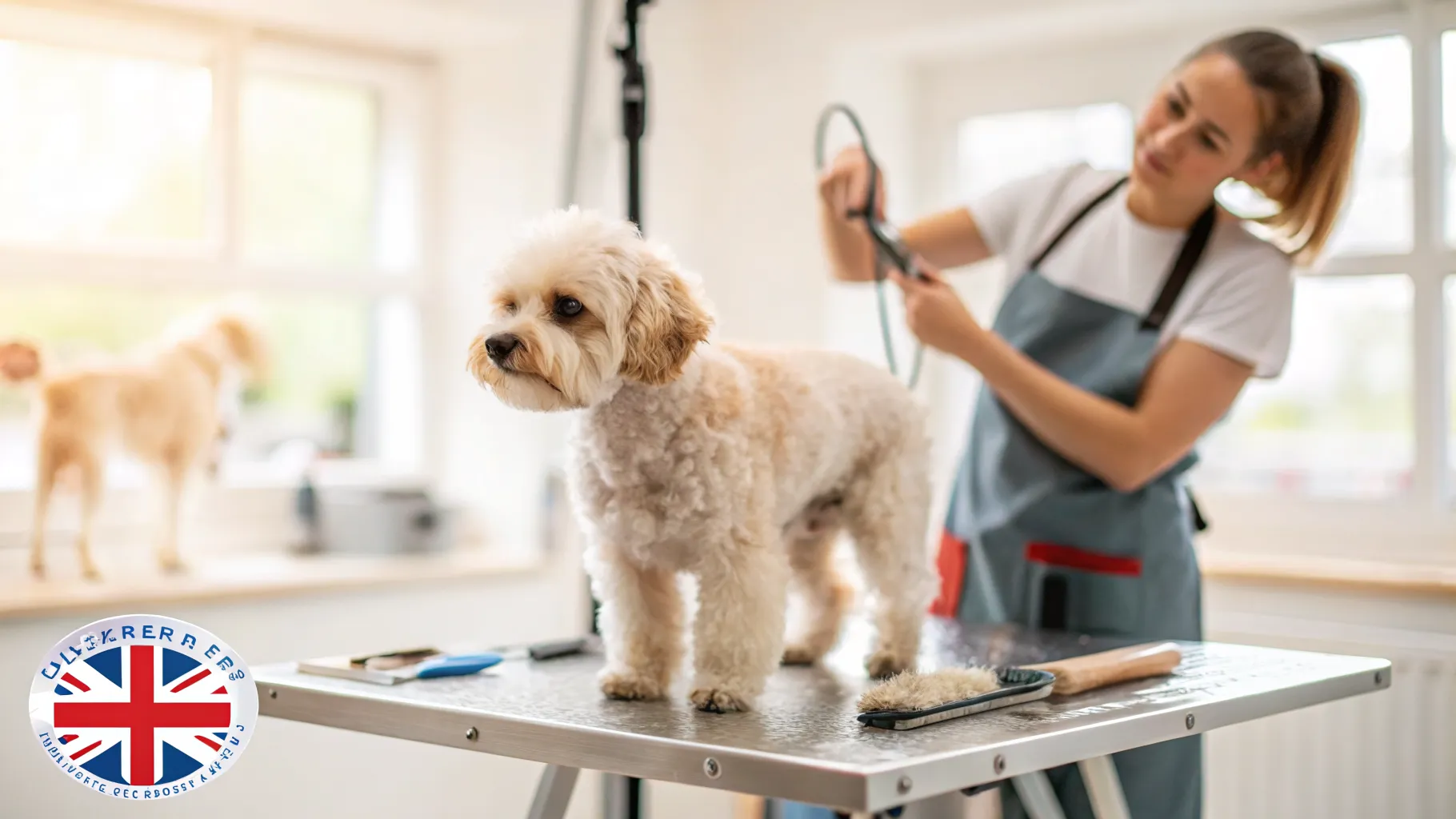
They keep a calm, quiet environment and take the session slowly rather than to a stopwatch. They let your dog see and sniff each tool before it is used, introduce the clippers and dryer gradually, and are gentle around the paws, face and water. They use treats, praise and breaks as positive reinforcement, and they will stop or pause if your dog becomes overwhelmed rather than pushing through. Many will happily do a shorter first session to build trust rather than attempting a full groom on day one.
Crucially, a good groomer talks to you about your dog’s triggers before starting, and tells you honestly afterwards how it went. That two-way conversation is the mark of someone who treats grooming as care, not just a haircut.
Accreditations and how to check
Some groomers train specifically in low-stress handling. The Fear-Free programme and the UK “Taking the Grrr Out of Grooming” accreditation both teach techniques for reducing fear and stress during grooming, so a groomer who mentions either has invested in exactly the right skills. Membership of a professional body such as the Pet Industry Federation is another positive signal.
Beyond the badges, read reviews with an eye for the word “nervous” or “anxious”, and ask the groomer directly about their experience. Charities like Dogs Trust offer general advice on reducing stress that is worth reading alongside. When you contact a groomer, our guide on the questions to ask a dog walker has a similar checklist mindset you can adapt.
Questions to ask before you book
A short conversation tells you most of what you need to know. Ask:
- Do you have experience grooming anxious or nervous dogs, and how do you handle them?
- Can we do a short introductory visit or a shorter first session so my dog can get used to you?
- What do you do if my dog becomes distressed during grooming?
- Do you use treats and breaks, and can I supply my dog’s favourites?
- How many dogs are in the salon at once, and is there a quieter time you can book us in?
A groomer who welcomes these questions is one who takes anxious dogs seriously. One who brushes them off is a warning sign.
Prepare your dog at home
You can do a lot before the appointment to lower your dog’s fear, and it costs nothing but time.
Get your dog used to being handled by gently touching their ears, paws and tail in short sessions, always followed by a treat. Introduce grooming tools slowly: leave a brush or clippers out for your dog to sniff, then pair a brief, light touch of the tool with praise and a reward, building up the duration over days and weeks. If your dog is frightened of the dryer or clipper noise, play those sounds quietly at first and reward calm behaviour.
On the day, a good walk beforehand helps burn off nervous energy, and keeping yourself calm matters too, because dogs read our body language and mirror our stress. Speak softly, stay relaxed, and hand over confidently rather than lingering anxiously at the door.
When to involve your vet
If your dog’s fear is severe, they panic to the point of aggression, or grooming has become impossible, talk to your vet before your next appointment. Some dogs benefit from a behaviour plan, and in specific cases a vet may discuss options for a dog that cannot be groomed safely while awake. This is a last resort, but for a genuinely traumatised dog it can be kinder than repeated frightening sessions. A good groomer will tell you honestly if they think your dog needs veterinary input rather than pressing on.
Frequently asked questions
How do I find a dog groomer for an anxious dog? Look for a groomer who advertises experience with nervous dogs, works slowly, and uses treats and breaks rather than force. Accreditations such as Fear-Free or “Taking the Grrr Out of Grooming” show they have trained in low-stress handling. Read reviews for mentions of anxious dogs, ask directly about their approach, and choose one who offers a short introductory session.
Can you groom a dog that hates being groomed? Often yes, but it takes patience and the right approach rather than force. A skilled groomer introduces tools gradually, keeps sessions short at first, and uses positive reinforcement to rebuild trust. Preparing your dog at home with handling and tool desensitisation helps a great deal. For severe fear, involve your vet, as some dogs need a behaviour plan before grooming becomes manageable.
Should I stay with my dog during grooming? It depends on the dog and the groomer. Some dogs settle better once the owner leaves, because they stop looking to you and focus on the groomer, while others are calmer with you present. Ask the groomer what they recommend. Whatever you do, stay calm and confident, because a nervous owner can make an anxious dog more worried.
How can I calm my dog before a grooming appointment? Give your dog a good walk beforehand to release nervous energy, keep your own manner relaxed, and practise gentle handling and tool desensitisation in the days before. Bring their favourite treats for the groomer to use, and book a quieter appointment time if possible. Building positive associations over several short sessions works far better than one long, stressful visit.
What is fear-free dog grooming? Fear-free grooming is an approach where the groomer is trained to minimise a dog’s fear, anxiety and stress throughout the session. It means a calm environment, slow introduction of tools, gentle handling, plenty of positive reinforcement, and stopping if a dog becomes distressed. Groomers with Fear-Free or “Taking the Grrr Out of Grooming” accreditation have studied these techniques specifically.
Looking for someone local?
Search your town to find checked groomers, walkers, sitters and pet shops near you, with real owner reviews.
Find local pet services