Dog grooming is about much more than keeping your pet looking attractive. Regular grooming maintains skin health, prevents painful matting, allows early detection of lumps, parasites, or skin conditions, and strengthens the bond between you and your dog. Whether you groom at home or visit professionals, understanding grooming principles helps you make good decisions for your dog's care.
Understanding Your Dog's Coat Type
Dogs have remarkably diverse coat types, each requiring specific grooming approaches. Understanding your dog's coat helps you provide appropriate care and communicate effectively with professional groomers.
Smooth coats, found on breeds like Beagles, Boxers, and Dalmatians, consist of short, close-lying hair requiring minimal grooming. These coats still shed and benefit from regular brushing to remove loose hair and distribute natural oils. Weekly brushing usually suffices for smooth-coated dogs.
Double coats have a dense, soft undercoat beneath longer outer guard hairs. Breeds like German Shepherds, Huskies, and Labradors have double coats that shed seasonally, sometimes dramatically. These coats require regular brushing to prevent undercoat impaction and manage shedding. During heavy shedding periods, daily brushing may be necessary.
Wire or rough coats, typical of many terriers and breeds like Schnauzers and Wire-haired Dachshunds, have coarse, bristly outer coats. These coats traditionally require hand-stripping to maintain proper texture, though many pet owners choose clipping for convenience despite it softening the coat texture over time.
Curly and wool coats, found on Poodles, Bichons, and many Doodle crosses, grow continuously and do not shed in the traditional sense. These coats require regular professional grooming, typically every four to eight weeks, to prevent severe matting. Home maintenance between professional sessions is essential.
Long coats, whether silky like Yorkshire Terriers or flowing like Afghan Hounds, require frequent brushing to prevent tangles and mats. These coats may also need regular trimming to maintain practical length and hygiene.
The Importance of Regular Brushing
Brushing is the foundation of good grooming, regardless of coat type. Regular brushing removes loose hair, prevents mats, distributes natural oils, stimulates skin circulation, and provides opportunity to check for lumps, bumps, parasites, and skin issues.
The frequency of brushing depends on coat type and length. Smooth-coated dogs may need only weekly brushing, while long-coated or curly dogs often need daily attention to prevent matting. During shedding season, even low-maintenance coats benefit from more frequent brushing.
Different brushes suit different coats. Slicker brushes work well on medium to long coats, removing tangles and loose hair. Pin brushes suit long, flowing coats. Bristle brushes work on smooth, short coats. Undercoat rakes and deshedding tools help manage double coats, particularly during shedding periods.
When brushing, work in sections, ensuring you reach down to the skin rather than just glossing over the top layer. Mats typically form close to the skin, and surface brushing can miss developing tangles until they become severe.
Pay special attention to friction areas where matting commonly develops: behind ears, under legs, around the collar area, and anywhere the coat rubs against itself. These areas need careful, frequent attention to prevent mat formation.
Bathing Your Dog
Bathing frequency depends on coat type, lifestyle, and any skin conditions. Most dogs need bathing every four to eight weeks, though this varies significantly. Dogs with oily coats or those who frequently swim, roll in muck, or have skin conditions may need more frequent bathing. Dogs with dry skin or certain coat types may need less frequent washing.
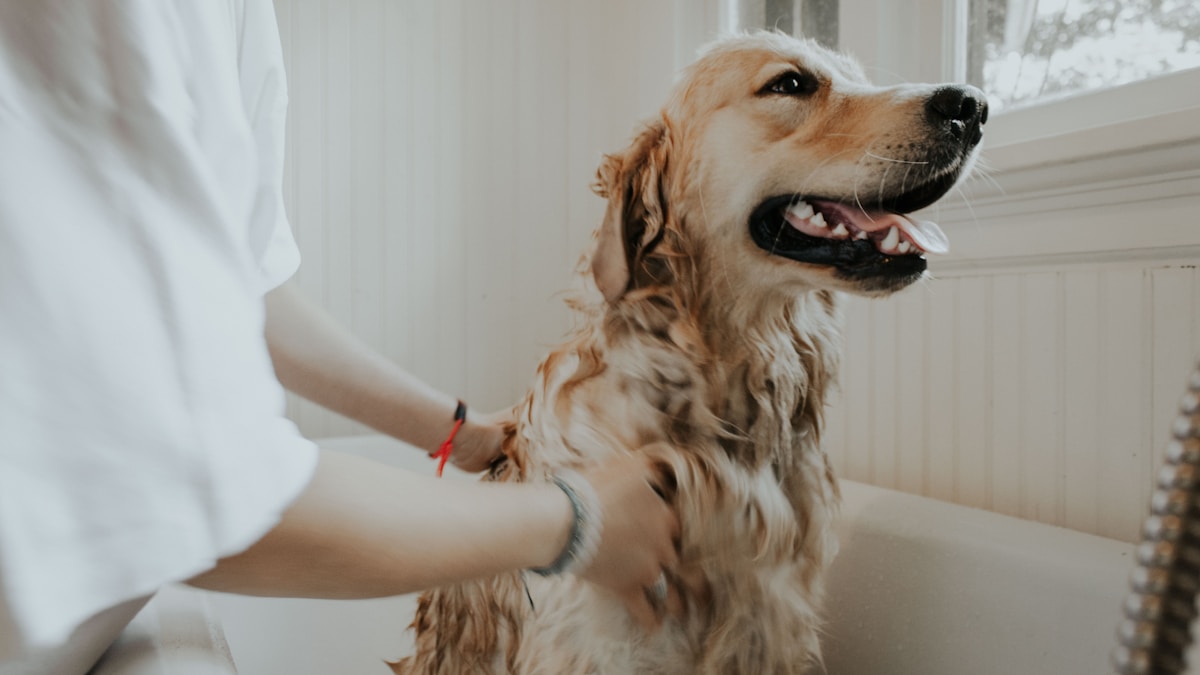
Always brush your dog thoroughly before bathing. Water tightens mats dramatically, turning minor tangles into solid, painful clumps that may require cutting out. Starting with a well-brushed coat ensures even cleaning and easier rinsing.
Use dog-specific shampoos formulated for canine skin pH. Human shampoos, even mild ones, can disrupt your dog's skin chemistry and cause irritation or dryness. Medicated shampoos should be used only under veterinary guidance, as improper use can worsen skin conditions.
Rinse thoroughly after shampooing. Residual shampoo irritates skin and attracts dirt, negating the benefits of bathing. Rinsing takes longer than most owners expect; continue until water runs completely clear and the coat feels clean rather than slimy.
Dry your dog appropriately after bathing. Towel drying suits some dogs, while others tolerate blow drying. If using a dryer, use a cool or warm setting rather than hot, and keep the dryer moving to avoid burning skin or overheating. Some coat types require specific drying techniques to achieve proper texture.
Nail Care
Nail trimming is essential but often neglected because many dogs dislike the process. Overgrown nails cause discomfort, alter gait, and can curl into paw pads causing pain and infection.
How often nails need trimming depends on exercise surfaces and individual growth rates. Dogs walking regularly on pavements may naturally wear their nails down, while those exercising mainly on grass or soft surfaces need more frequent trimming. Generally, if you can hear nails clicking on hard floors, they need cutting.
The quick, which is the blood vessel and nerve running through each nail, limits how short you can cut. In light-coloured nails, the quick appears as a pink section; cut just below where the pink ends. Dark nails hide the quick, requiring more cautious, gradual trimming.
If you cut the quick, it bleeds and hurts. Keep styptic powder or a suitable alternative available to stop bleeding. One painful nail trim experience can make dogs fearful of future trimming, so proceed carefully and stop before risking the quick.
Many owners find professional nail trimming less stressful than home attempts. Groomers and veterinary staff trim nails routinely and handle reluctant dogs professionally. The small cost of regular professional nail trims may be worthwhile if home trimming causes significant stress.
Ear Cleaning
Ears require regular checking and occasional cleaning, with frequency depending on ear type and individual tendency toward wax buildup or infection. Floppy-eared breeds and dogs who swim regularly typically need more attention than erect-eared breeds.
Check ears weekly for signs of problems: excessive wax, unpleasant odour, redness, swelling, or discharge. Healthy ears appear clean, pale pink inside, and odourless or with only mild natural scent.
Clean ears only when genuinely needed rather than on a strict schedule. Over-cleaning disrupts natural ear chemistry and can cause problems. When cleaning is necessary, use veterinary-recommended ear cleaners and follow product instructions carefully.
Never insert anything into the ear canal. Clean only the visible outer ear using cotton wool or soft cloth moistened with cleaner. Deep cleaning should be performed by veterinary professionals who can assess ear health and clean safely.
Dogs prone to ear problems may benefit from preventive care routines recommended by their vet. Some dogs need regular medicated ear treatments, particularly those with allergies or anatomical features predisposing them to ear issues.
Dental Care
Dental disease affects the majority of dogs by age three, yet dental care remains among the most neglected aspects of pet health. Regular dental care prevents painful disease, expensive treatments, and systemic health problems linked to poor oral health.
Daily toothbrushing is the gold standard for canine dental care. Use dog-specific toothpaste, never human products containing ingredients toxic to dogs. Finger brushes or small dog toothbrushes allow effective cleaning. Even partial brushing provides benefits; getting some brush time on teeth is better than none.
Introduce toothbrushing gradually, allowing your dog to accept the brush and taste the toothpaste before attempting to clean teeth. Make the experience positive with praise and patience. Rushing the introduction creates resistance that makes future brushing difficult.
Dental chews and certain toys can supplement brushing but should not replace it entirely. Look for products carrying the Veterinary Oral Health Council (VOHC) seal, indicating proven effectiveness. Avoid very hard chews that can fracture teeth.
Professional dental cleaning under anaesthesia may be necessary periodically to remove tartar buildup below the gumline that brushing cannot address. Your vet can assess your dog's dental health and recommend appropriate cleaning intervals.
Professional Grooming: What to Expect
Professional groomers provide services ranging from basic baths and brush-outs to complex breed-specific styling. Understanding what happens during grooming visits helps you choose appropriate services and communicate your preferences effectively.
A typical full groom includes brushing, bathing, blow drying, coat trimming or styling as appropriate, nail trimming, ear cleaning, and sanitary trimming around the rear end. Additional services like teeth brushing, anal gland expression, or specialty treatments vary by salon.
Before first appointments, communicate your dog's temperament, any health issues, sensitive areas, or previous grooming experiences. Good groomers want this information to provide appropriate care and handle your dog safely.
Discuss the style you want clearly. Bringing photos helps prevent misunderstandings, particularly for mixed breeds where groomers may have different ideas about appropriate styles. Specify length preferences in terms groomers understand, as "not too short" means different things to different people.
Ask groomers about their approach to handling nervous or difficult dogs. Quality groomers work patiently with challenging dogs rather than forcing compliance through restraint or intimidation. If your dog returns from grooming stressed, fearful, or showing signs of rough handling, find a different groomer.
Choosing Between Professional and Home Grooming
Whether to groom at home or use professionals depends on your dog's coat type, your confidence and skill, available time, and your dog's temperament.
Home grooming works well for smooth-coated and short-haired dogs needing mainly brushing, bathing, and nail maintenance. Owners comfortable with basic grooming tasks can maintain these coats effectively between occasional professional attention.
Professional grooming is typically necessary for curly, wool, and wire-coated breeds requiring clipping, scissoring, or hand-stripping beyond most owners' skills. These coats mat quickly without proper maintenance and require trained technique to groom properly.
Many owners combine approaches: maintaining coats at home between professional appointments. This strategy keeps coats manageable, extends time between grooming visits, and helps dogs remain comfortable with handling and grooming procedures.
Even if you primarily home groom, occasional professional sessions can help. Professional groomers may notice early signs of skin problems, lumps, or other issues that owners miss. They also provide thorough cleaning that may be difficult to achieve at home.
Building Positive Grooming Experiences
Dogs who tolerate or enjoy grooming make the process easier and safer for everyone involved. Building positive associations with grooming from puppyhood prevents problems, though adult dogs can also learn to accept grooming more willingly.
Start handling puppies from the earliest age, touching paws, ears, mouth, and all body parts regularly. Pair this handling with treats and praise. Puppies who associate handling with positive experiences grow into adults who accept grooming calmly.
Introduce grooming tools gradually. Let your dog sniff and investigate brushes, nail clippers, and other equipment before using them. Touch tools to your dog's body without actually grooming, rewarding calm behaviour. Progress slowly to actual grooming as your dog remains relaxed.
Keep early grooming sessions short and positive. A few pleasant minutes are better than a long session that becomes stressful. Build duration gradually as your dog learns to relax during grooming.
If your dog has developed grooming anxiety, consult a qualified behaviourist. Grooming anxiety can worsen without proper intervention, and forcing compliance typically increases fear rather than resolving it. Professional guidance helps create plans for gradual, positive desensitisation.
Seasonal Grooming Considerations
Grooming needs change seasonally for many dogs. Understanding these variations helps you provide appropriate care throughout the year.
Spring and autumn bring heavy shedding for double-coated breeds as they change between winter and summer coats. Increased brushing frequency during these periods prevents loose hair accumulating and forming mats. Deshedding tools become particularly useful during heavy shedding.
Summer may require more frequent bathing for dogs who swim, roll in things, or simply get dirtier in nice weather. Check for grass seeds, foxtails, and other plant material that can become embedded in coats or penetrate skin. Keep coat lengths practical for warm weather without removing protective coverage entirely.
Winter coats provide insulation, so avoid clipping double-coated breeds short before cold weather. However, maintaining hygiene clips, particularly around feet and sanitary areas, prevents snow balls forming in the coat and maintains cleanliness regardless of season.
Regular grooming throughout all seasons keeps you aware of your dog's normal coat condition, making it easier to notice abnormal changes that might indicate health problems or parasites. This monitoring function makes consistent grooming valuable beyond coat maintenance alone.