How to Crate Train a Puppy Without the First Night Crying
By the Pets Locally team
Updated 2026
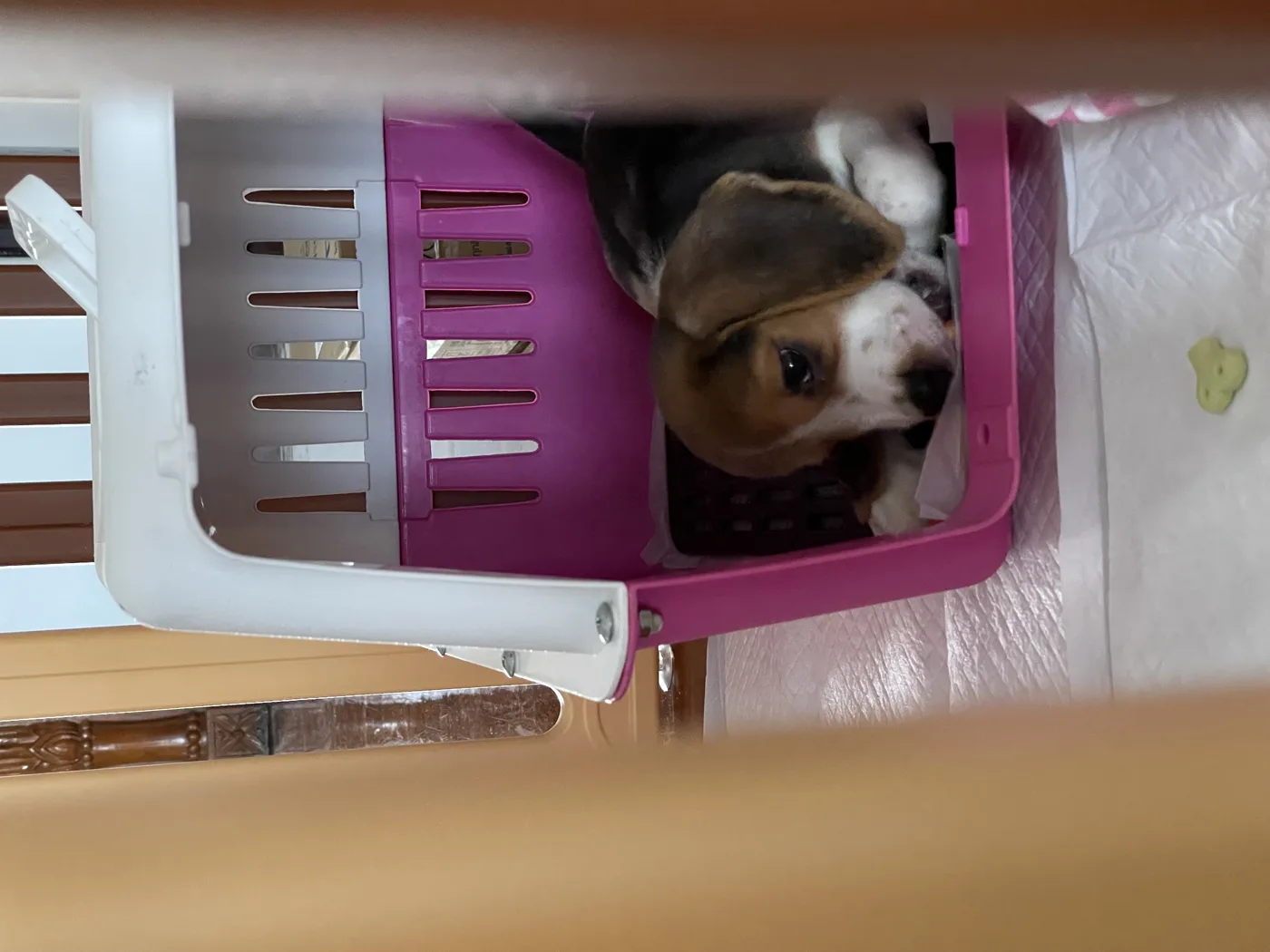
Most guidance on how to crate train a puppy is written for the American market, where crates are used far more heavily and for far longer than British welfare organisations consider acceptable. That difference matters, because the technique is the same but the limits are not. The RSPCA is clear that a crate is a safe space a dog chooses to use for short periods, never a place to contain a dog for convenience, and never a punishment.
Done properly, crate training gives a puppy somewhere it genuinely likes, makes toilet training dramatically faster, and means the vet’s overnight cage or a car journey is not the first confinement it has ever experienced. Done badly, it teaches a puppy that being shut in is frightening, and undoing that takes months.
Here is the gentle version, stage by stage.
Get the crate itself right first
Size. Big enough to stand up without ducking, turn around comfortably and lie fully stretched out. No bigger. That sounds mean and it is the opposite: a crate with spare room lets a puppy use one end as a toilet and sleep in the other, which destroys the toilet-training benefit entirely.
For a breed that will grow substantially, buy the adult-size crate with a divider panel and move the divider out as the puppy grows. Buying three crates is a waste and swapping crates resets the training.
Where. In the room where the family is, not a utility room or a garage. A crate somewhere isolated teaches a puppy that going in means being abandoned. For the first few weeks, put it in your bedroom at night; almost every account of a horrendous first night involves a puppy shut alone downstairs.
What goes in it. Comfortable bedding, something that smells of the litter or the breeder’s home if you have it, fresh water, and safe chews. Nothing the puppy can shred and swallow while unsupervised.
Cover it, partly. A blanket over the top and one or two sides makes it den-like and cuts visual stimulation. Leave the front open and make sure it does not overheat.
The seven stages, and the rule that governs all of them
Every stage ends before the puppy gets uneasy. If a stage produces whining or reluctance, you moved too fast; go back to the previous stage and stay there for a few days. The RSPCA’s crate guidance makes the same point, that training happens in small steps and the crate must always be associated with something pleasant.
1. Door open, nothing asked. Set the crate up with the door fixed open so it cannot swing shut and startle anyone. Scatter a few treats inside and walk away. Let the puppy discover it. Do this for a day or two, saying nothing.
2. Feed at the door, then inside. Put the bowl just inside the entrance. Once that is easy, move it further in over several meals until the puppy eats at the back of the crate with the door still open.
3. Add a cue and a chew. When the puppy goes in willingly, name it, “bed” or “crate”, and give a long-lasting chew inside. You want the crate to be where the best things happen.
4. Close the door for seconds. Push the door to while the puppy is eating or chewing, then open it before the chew is finished. Build from two seconds to a minute over multiple sessions. Never open the door in response to whining, or you have just taught the puppy that whining opens doors; wait for a quiet moment, even a brief one, and open it then.
5. Stay in the room with the door shut. Sit nearby reading or on your phone. Build up to fifteen or twenty minutes with the puppy settled and you present.
6. Leave the room briefly. Step out for ten seconds and come back without fuss. No emotional greeting, no apology, just an ordinary return. Extend gradually. Coming back before the puppy gets worried is the whole technique.
7. Normal life. Short absences, the crate used for naps, the door left open most of the time. A properly crate-trained dog takes itself in there to sleep.
Realistically this takes two to four months to be reliable. Puppies that arrive at eight weeks and are shut in on the first night take longer, not less time, because you spend the following weeks repairing the association.
How long is too long
Two limits apply, and you follow whichever is shorter.
Bladder. A rough rule is roughly one hour per month of age: an eight-week puppy can manage about two hours, a twelve-week puppy about three. Overnight is different because they are asleep and not drinking, but a young puppy will still need at least one toilet trip in the night.
Welfare. UK charities set the tighter limit. Young puppies should not be in a crate for more than two to three hours without a break, and the general advice is that a dog should not be crated for more than around three hours at a stretch. Crates are not a solution to a full working day; if nobody is home, you need a dog walker or daycare rather than a bigger crate.
Once a dog is genuinely trained, the door should be open most of the time. A crate you have to shut every day is doing a containment job, not a comfort one.
The first night
Expect noise. Your puppy has gone from sleeping in a heap of littermates to sleeping alone in a strange building, and complaining about that is entirely reasonable behaviour.
What helps: the crate beside your bed so it can hear and smell you; something with the litter’s scent in the bedding; a last toilet trip immediately before bed; and a boring, silent, minimal-light toilet trip if it wakes in the night, straight back to the crate with no play.
Learn the difference between the two cries. Toilet crying is urgent, restless and escalating: answer it, go outside, no conversation, no treats, back to bed. Attention crying is rhythmic and settles if ignored: do not answer it, because answering teaches a very fast lesson. If you genuinely cannot tell, take the puppy out; a wrong toilet trip costs you five minutes, a wrong ignore costs you a soiled crate and a setback.
Moving the crate gradually out of the bedroom over the following weeks, a little further each few nights, works far better than a single relocation.
Common mistakes
- Using it as punishment. The single most damaging thing you can do. The PDSA and RSPCA are both unambiguous on this, and PDSA’s crate training advice is worth reading alongside this page.
- Buying a crate that is too big. It reads as generous and it undermines toilet training.
- Long dramatic goodbyes. Departures and returns should be boring. Emotional farewells raise the stakes.
- Opening the door to stop the crying. Wait for a pause, however short, and open on that instead.
- Skipping to stage five in a weekend. The rush is where the fear comes from.
- Leaving a collar on inside the crate. Tags and collars catch on bars. Take it off.
- Crating instead of exercising. A crate is for resting in, not for containing a puppy that needs a walk.
Crate training and toilet training run together, and our puppy toilet training guide covers the routine that goes alongside this. If the crying persists for weeks, or the puppy panics rather than protests, that is separation-related distress rather than a training gap, and it needs a qualified behaviourist rather than more repetitions.
Frequently asked questions
How long does it take to crate train a puppy? Two to four months to be genuinely reliable, though most puppies will settle in the crate for short periods within a week or two. Going too fast in the first fortnight is what makes the whole process take longer.
Should I ignore my puppy crying in the crate at night? Only if it is attention crying. A young puppy genuinely needs a toilet trip in the night, so answer urgent, restless crying with a quiet, boring trip outside and straight back. Rhythmic complaining that settles is different, and answering it teaches the puppy that crying works.
How long can a puppy be left in a crate? Roughly one hour per month of age for bladder control, but UK welfare guidance is stricter: no more than two to three hours for a young puppy without a break, and no more than about three hours at a stretch for a dog. A crate is not a way to cover a working day.
What size crate does my puppy need? Big enough to stand, turn around and lie fully stretched, and no bigger. Buy the adult size with a divider and move the divider as the puppy grows, rather than buying a small crate and replacing it.
Should the crate be in my bedroom? For the first few weeks, yes. Being able to hear and smell you is what gets most puppies through the first nights. Move it a little further away every few nights once it is settled, rather than relocating it all at once.
Is crate training cruel? Not when it is done properly and the crate is a place the dog chooses to go for short periods with the door usually open. It becomes cruel when it is used as punishment, or to contain a dog for long stretches because it is convenient.
Looking for someone local?
Search your town to find checked groomers, walkers, sitters and pet shops near you, with real owner reviews.
Find local pet services