Mobile vs Salon Dog Grooming: Which Is Right for Your Dog?
By the Pets Locally team
Updated 2026
Most UK owners face the same question, but the bigger choice isn’t price. It’s whether the work happens at a salon down the road or in a van parked outside your house. The two models suit different dogs, different owners, and different coats. This guide gives you a clear way to decide, plus the UK price reality and the trust checks that almost no other page bothers to explain.
The quick decision
If you want a single line to act on, here it is.
Choose mobile if your dog is nervous, reactive, elderly, or doesn’t travel well; if you have no car or a busy schedule; if you have one or two dogs and a flat parking space near your door; or if you want one-to-one attention with no exposure to other dogs.
Choose a salon if you want the lower price and more appointment slots; if your dog is large or giant, very heavily matted, or a heavy-shedding double-coated breed that needs serious dryer power; or if you have easy transport and a dog that copes fine with the trip and the busier environment.
Most dogs are happy either way. The framework below is for the cases where it genuinely matters.
What it costs in the UK
Grooming prices vary by region, breed, coat and how matted the dog is, so treat everything here as relative guidance rather than fixed quotes.
A standard full groom at an average salon is the cheaper option for most family pets, rising for large dogs or complex coats. Mobile grooming usually costs a little more than a comparable salon appointment, commonly in the region of ten to twenty per cent more. That premium is not a markup for its own sake: a mobile groomer pays for the van, fuel, water heating, power and insurance, and a sole trader working from a van handles only four to six dogs a day. A multi-groomer salon gets through far more, so it can charge less per dog.
Mobile prices also vary noticeably by city, with London at the top end and smaller cities lower. As a rough sense of the spread, the same breed can cost meaningfully more in a London salon than in a smaller regional town, so always get a local quote rather than trusting a national average.
Typical add-ons
Many grooms are priced as a full package, but if you book individual services or extras, common add-ons include:
- A thorough wash or bath
- Nail trim
- Ear cleaning
- Teeth brushing
- Flea treatment
Ask whether these are included in the headline price or charged on top, because that single question explains most of the confusion around quotes. For a fuller walkthrough of comparing quotes and shortlisting, see how to choose a dog groomer.
Salon vs mobile at a glance
| Salon | Mobile | |
|---|---|---|
| Price | Lower | Usually 10 to 20 per cent more |
| Appointment availability | More slots | Fewer slots, longer lead times |
| Travel | You drive there | Comes to you |
| Other dogs present | Yes | No |
| Waiting / kennelling | Possible, sometimes all day | None, one dog at a time |
| Equipment for very large or double-coated dogs | Better (hydrobaths, larger dryers) | Can be space and dryer limited |
| Best for | Large dogs, transport-owners, dogs that cope with a busier place | Anxious, senior, single-pet or no-transport households |
How the van actually works
This is the question owners ask most and almost no page answers plainly.
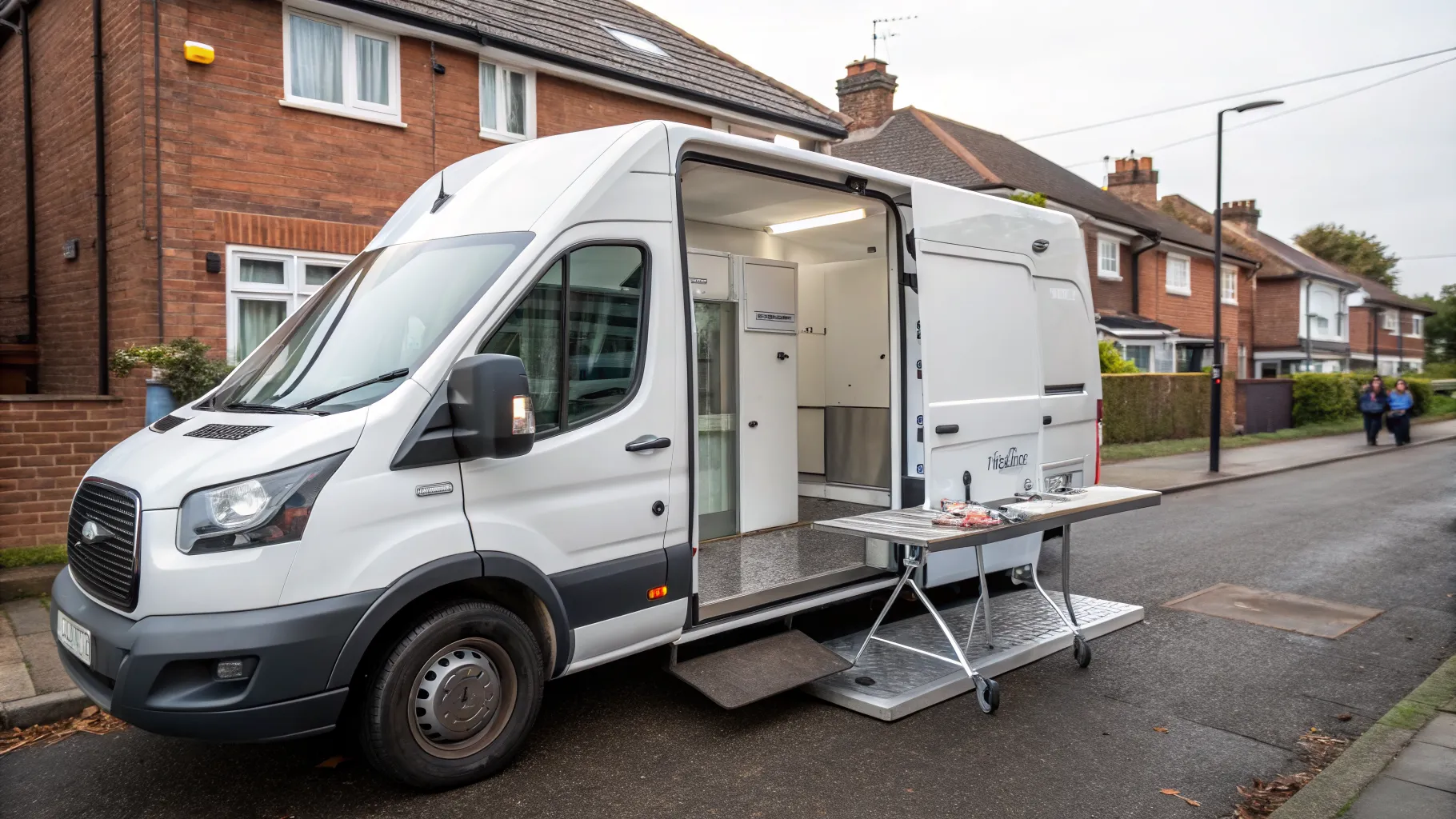
A proper mobile grooming van is self-contained. It carries its own fresh-water tank, a water heater, and a generator or power supply. You do not need to provide a water hookup or an electricity socket. The groomer arrives ready to work.
What they do need is a flat space to park reasonably close to your property. Occasionally a groomer may ask to top up the fresh-water tank from a garden hose, but that is a convenience, not a requirement.
A mobile appointment typically runs about sixty to ninety minutes for one dog, longer for a full haircut on a bigger or thicker coat. It is often quicker overall than a salon because there is no drop-off, no collection trip, and no waiting around with other dogs: it is one dog, start to finish.
You usually need to be home, or to have arranged access and someone present, since the groomer is working at your address and may need you for the dog’s arrival and handover. Confirm this when you book.
Anxious, senior and single dogs
This is where mobile earns its premium for a lot of owners.
A mobile groom removes the things that wind many dogs up: the car journey, unfamiliar people, a room full of other dogs, the noise of high-velocity dryers and barking, and the wait in a cage or pen. The dog gets one-to-one attention a few feet from its own front door, at a pace the groomer can adjust with breaks.
That makes it a strong fit for nervous or reactive dogs, elderly dogs who find travel and standing around tiring, single-pet households, owners without a car, and households with several dogs to do in one visit.
Two honest caveats. Mobile is not a fix for severe anxiety. Some dogs find the confined van or the hum of the generator stressful, and a calm, experienced salon groomer working in a quiet, well-run room can suit a worried dog just as well. Either way, tell the groomer about the anxiety before the appointment so they can plan for it. If you are booking mobile specifically for a nervous dog, our list of questions to ask a mobile dog groomer covers what to check first. Puppies are a separate case: see what to expect at a puppy’s first grooming appointment.
Size and coat: which model handles your dog
Temperament is one half of the decision. The physical job is the other.
- Clipped breeds (poodles, schnauzers, many crossbreeds) need a professional groom roughly every four to six weeks. Either model handles this well.
- Poodle crosses such as cockapoos and cavapoos mat badly. They need brushing several times a week at home; tight curly coats really do need daily attention. If the coat has matted to the skin, any groomer may have to clip it short to avoid hurting the dog, mobile or salon. Keeping on top of brushing between appointments matters more than which model you pick. Our guide on how often you should groom your dog breaks this down by coat type.
- Double-coated breeds such as huskies and German shepherds need de-shedding, not clipping, and a lot of dryer power. Very large or very heavy-shedding dogs are where a salon’s bigger high-velocity dryers and hydrobaths can have the edge. Some van setups manage giant or heavy shedders fine, but it is worth asking directly before you book.
Checking a groomer is properly trained and insured
Here is a fact most owners don’t know: dog grooming is not a legally regulated profession in the UK. No licence and no qualification is legally required to groom dogs or to open a grooming business. That makes it your job to vet whoever handles your dog, and the checks are identical whether they work from a salon or a van.
What to look for:
- A recognised qualification. The most established is the City & Guilds Level 2 Certificate for Dog Grooming Assistants and the City & Guilds Level 3 Diploma in Dog Grooming (qualification number 7863), both regulated by Ofqual. The Level 3 Diploma is the professional standard and includes practical assessment across several breeds plus a written exam covering animal welfare, canine anatomy and health checks. Another recognised, Ofqual-regulated route is the iPET Network Level 3 Diploma in Dog Grooming. You can read about the City & Guilds qualification on the City & Guilds dog grooming page.
- Membership of a professional body. Names worth recognising are the British Isles Grooming Association (BIGA), the British Dog Groomers’ Association (BDGA) and the Pet Industry Federation (PIF), of which the BDGA is the grooming division.
- Insurance. A professional groomer should carry public liability and animal liability cover. Insurers usually want evidence of training before they cover a groomer, so “are you trained and insured?” is a fair, telling question to ask either model.
For broader welfare guidance on picking any groomer, the RSPCA’s advice on grooming and choosing a groomer is a sound starting point.
So which one?
Run your dog through three filters in order:
- Temperament and travel. Nervous, reactive, elderly, carsick, or no transport? Lean mobile. Copes fine and you have a car? A salon is cheaper and easier to book.
- Size and coat. Giant, double-coated, or a heavy shedder needing serious dryer power? Lean salon. Standard pet, one or two dogs, flat parking outside? Mobile works well.
- Budget and convenience. Want the lowest price and the widest choice of slots? Salon. Will pay a modest premium to skip the trip and the waiting? Mobile.
Where the three filters disagree, weight temperament most heavily. A calm groom your dog tolerates beats a cheaper one it dreads.
Frequently asked questions
Is mobile dog grooming more expensive than a salon, and by how much? Usually yes, but not by a lot. Mobile typically costs in the region of ten to twenty per cent more than a comparable salon appointment. The difference reflects the van, fuel, water heating, power and insurance, plus the fact that a mobile groomer does only four to six dogs a day while a multi-groomer salon handles far more.
How much does mobile dog grooming cost in the UK? It depends on your region, your dog’s size and coat, and how matted it is, so always get a local quote. Prices run higher in London and other big cities and lower in smaller towns, and add-ons such as nail trims, ear cleaning, teeth brushing and flea treatment may be charged on top of the base groom.
Does a mobile groomer need access to my water and electricity? No. A proper mobile van is self-contained, with its own fresh-water tank, water heater and generator or power supply. You only need to provide a flat parking space reasonably close to your property. A groomer might occasionally ask to top up the water tank from a garden hose, but it isn’t required.
How long does a mobile groom take? Roughly sixty to ninety minutes for one dog, and longer for a full haircut on a larger or thicker coat. It is often quicker overall than a salon because there is no drop-off, no collection trip and no waiting around with other dogs.
Is mobile grooming better for anxious or older dogs? It often is, because it removes the car journey, unfamiliar people, other dogs, dryer noise and cage waiting, and gives one-to-one attention near home. It is not a cure for severe anxiety, though. Some dogs find the confined van or the generator noise stressful, and a calm, experienced salon groomer can suit a worried dog well too. Tell the groomer about the anxiety before you book.
Is mobile grooming safer because there’s no contact with other dogs? It does mean your dog isn’t mixing with other animals, which lowers the chance of stress flare-ups or picking something up from another dog. That is a genuine plus for reactive dogs and for households that prefer to keep contact minimal, though a clean, well-run salon manages this risk too.
Do mobile vans have space for large or double-coated dogs? Many do, but it varies. Very large, giant or heavily shedding double-coated dogs sometimes need the bigger high-velocity dryers and hydrobaths that a salon can offer. Ask the groomer directly about your dog’s size and coat before booking.
Do I need to be home during a mobile appointment? Usually yes, or you need to arrange access and have someone present. The groomer is working at your address and may need you for the dog’s arrival and handover. Confirm this when you book.
How do I check a groomer is qualified and insured? Grooming is unregulated in the UK, so ask directly. Look for a recognised qualification such as the City & Guilds Level 2 or Level 3 Diploma in Dog Grooming (number 7863), membership of a professional body like BIGA, the BDGA or the Pet Industry Federation, and proof of public liability and animal liability insurance. These checks apply equally to mobile and salon groomers.
Which is better for a household with several dogs? Mobile can be convenient because the groomer does all your dogs in one visit at your home, with no multiple trips. A salon may still work out cheaper per dog if your dogs travel and wait happily, so weigh the saving against the hassle of getting them all there and back.
Looking for someone local?
Search your town to find checked groomers, walkers, sitters and pet shops near you, with real owner reviews.
Find local pet services